


Thyroid Support
Functional Support for Thyroid Health
The thyroid is a small gland located in the neck that plays a powerful role in regulating metabolism, energy production, body temperature, and many hormonal processes throughout the body.
Thyroid hormones influence how quickly cells produce energy, how the body uses nutrients, and how many systems in the body communicate with each other. Because of this, changes in thyroid function can affect energy levels, mood, weight regulation, digestion, menstrual cycles, and cognitive function.
Many people assume thyroid issues are only present when laboratory tests clearly show hypothyroidism or hyperthyroidism. In reality, symptoms related to thyroid function can begin developing long before those conditions are formally diagnosed.
Understanding Thyroid Hormones
The thyroid primarily produces a hormone called thyroxine, known as T4. This hormone is considered a storage or precursor hormone. In order for the body to use it effectively, T4 must be converted into triiodothyronine, known as T3, which is the biologically active form of thyroid hormone.
T3 is the hormone that interacts with cells to influence metabolism, energy production, and temperature regulation.
When this conversion process is disrupted, a person may experience symptoms of thyroid dysfunction even when T4 levels appear normal.
In addition to T3 and T4, the body also produces thyroid antibodies in certain conditions. These antibodies are markers of immune system activity directed toward the thyroid gland and are commonly associated with autoimmune thyroid conditions such as Hashimoto’s thyroiditis.
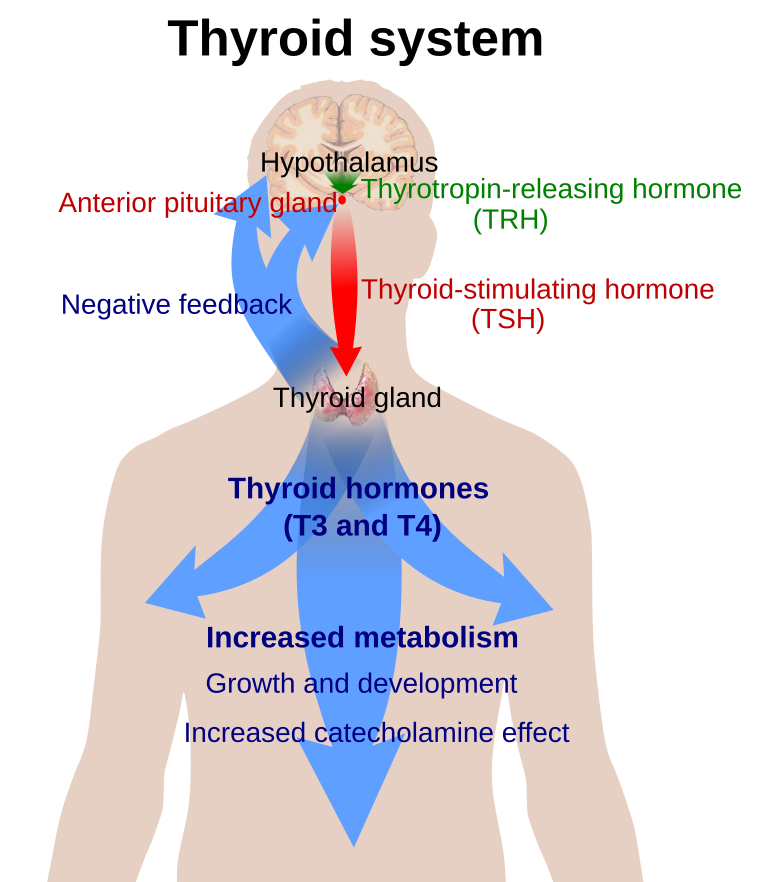
Source: Wikipedia
Common Thyroid Disorders
Hypothyroidism: The thyroid is underactive and produces too little hormone.
Hyperthyroidism: The thyroid is overactive and produces too much hormone.
Hashimoto’s thyroiditis: An autoimmune condition where the immune system attacks the thyroid, often leading to hypothyroidism.
Graves’ disease: An autoimmune condition that can cause hyperthyroidism.
When Balance Shifts
Thyroid function depends on communication between several systems in the body.
The brain signals the thyroid through the hypothalamus and pituitary gland, which release thyroid stimulating hormone (TSH). This signal tells the thyroid how much hormone to produce.
The thyroid then releases T4, which must be converted into active T3 in tissues throughout the body, including the liver, gut, and other organs.
Several factors can influence how well this system functions. Nutrient status, stress hormones, inflammation, digestive health, and overall metabolic balance all play roles in how thyroid hormones are produced, converted, and used by the body.
Because these systems interact with one another, symptoms of thyroid dysfunction may appear even when only part of the pathway is affected.
Common Signals of Thyroid Imbalance
Persistent fatigue or low energy
Difficulty maintaining body temperature, often feeling cold
Unexplained weight changes
Hair thinning or hair loss
Brain fog or difficulty concentrating
Dry skin or brittle nails
Constipation or slowed digestion
Changes in menstrual cycles
Because thyroid hormones influence many systems in the body, symptoms may appear across metabolism, digestion, mood, and energy regulation.
Understanding how thyroid hormones are produced, converted, and used by the body can help bring clarity to symptoms that might otherwise feel confusing. When thyroid function is evaluated alongside overall health patterns, it becomes easier to identify areas where the body may need additional support.
How Thyroid Testing Is Often Interpreted
Standard thyroid testing is often designed to detect clear pathology, meaning disease that has progressed to a level where it meets diagnostic criteria.
For many people, laboratory results may still fall within reference ranges even when symptoms are present.
Most conventional testing focuses primarily on TSH, which reflects the signal from the brain to the thyroid. While this can be useful, it does not always provide a full picture of how thyroid hormones are being produced, converted, and used by the body.
Markers such as free T3, free T4, and thyroid antibodies can provide additional context about thyroid function, particularly when symptoms suggest that the thyroid system may be under strain.
Understanding Reference Ranges
Laboratory reference ranges are created by analyzing test results from large populations and defining a statistical range that includes the majority of those results.
These ranges are designed to help identify clear disease states, but they do not always reflect what may be optimal for every individual.
For example, a result may fall within the laboratory reference range while still being at the very low or very high end of that range. In some cases, people may experience symptoms when hormone levels are within the range but not ideal for how their body functions.
This is why thyroid evaluation often involves looking at patterns across several markers, along with symptoms and overall health history.
If these symptoms sound familiar, your thyroid may be part of the picture. Understanding what your thyroid does — and how to support it — is the first step toward feeling steady again.